Judicial Management of MDLs
As recently as 1991, multidistrict litigation (MDLs) accounted for only about 1 percent of civil cases in federal courts. Today, that figure has grown to roughly 65 percent. As such, each year, the claims consolidated in MDLs affect the lives of hundreds of thousands of American litigants.
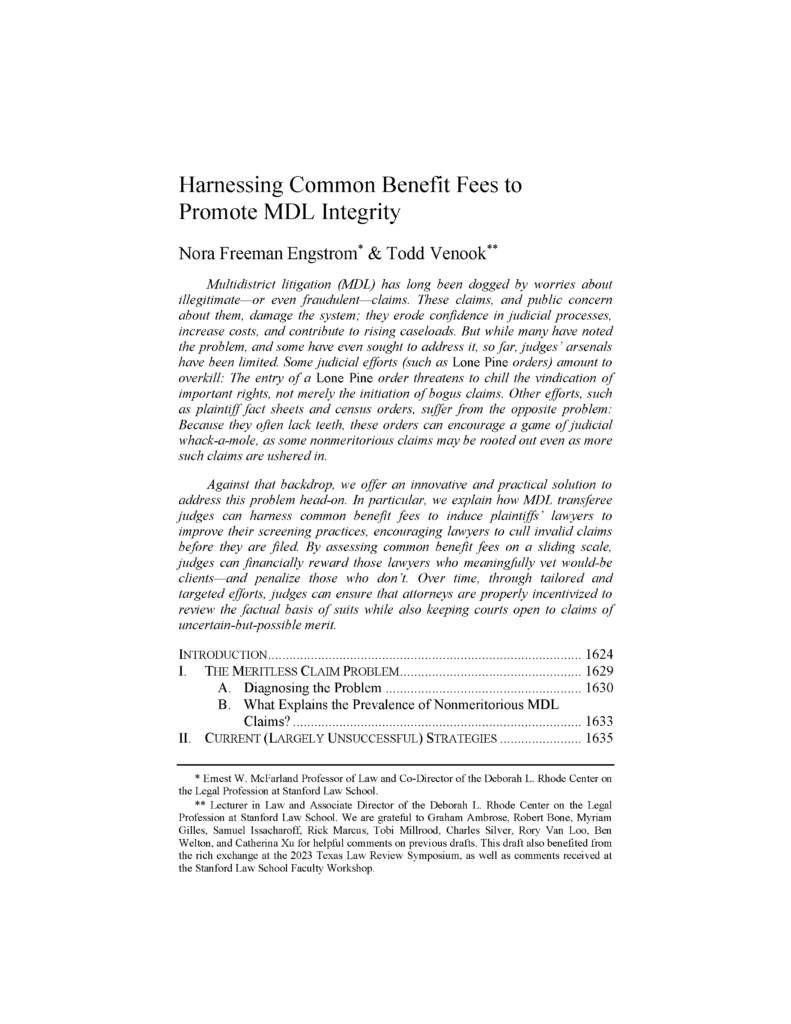
MDLs also serve as laboratories for procedural innovation where judges, attorneys, and other stakeholders develop creative solutions to complex case management challenges. These cases present a microcosm of larger phenomena rippling through the broader civil system: managerial judging, increasing use of technology, and persistent efforts to promote efficiency and preserve judicial capacity. Understanding the judicial system writ large requires grappling with these trends—and recognizing their effects on litigants.
Stakeholder Resources
For many involved in MDLs, including transferee judges new to these management challenges, the suits present a host of complex decisions but a lack of associated guidance. One stakeholder recently told us that these decisions—many of which arise in the first few months after cases are transferred—“can have profound and sometimes hidden effects down the road.” The Rhode Center works alongside academics, policymakers, judges, and practitioners to help. The aim is to ensure that those in the trenches have the resources they need, supplied with a light touch rather than a heavy hand.
MDL Toolkit
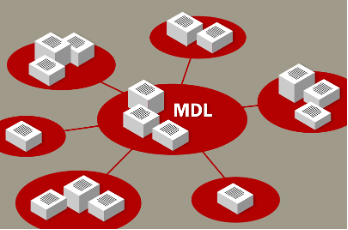
We developed the Multidistrict Litigation Toolkit to serve judges and practitioners preparing for, or engaging in, large-scale aggregate litigation. The tool is designed to inform judges’ crucial organizational and management decisions, help attorneys navigate key milestones and identify major questions, and support litigants interested in better understanding the labyrinthine system that their claim has entered. The toolkit offers resources centered around six core topics:
- promoting claim integrity
- leadership personnel decisions
- common benefit funds
- bellwether trials
- judicial, adjuncts, magistrates, and special masters
- facilitating and structuring settlements
The Rhode Center is continuously looking for examples of orders strong enough to guide future judges, attorneys, and scholars—across any type of MDL. To submit an order, please feel free to contact mdl-orders@stanford.edu.
MDL Covening
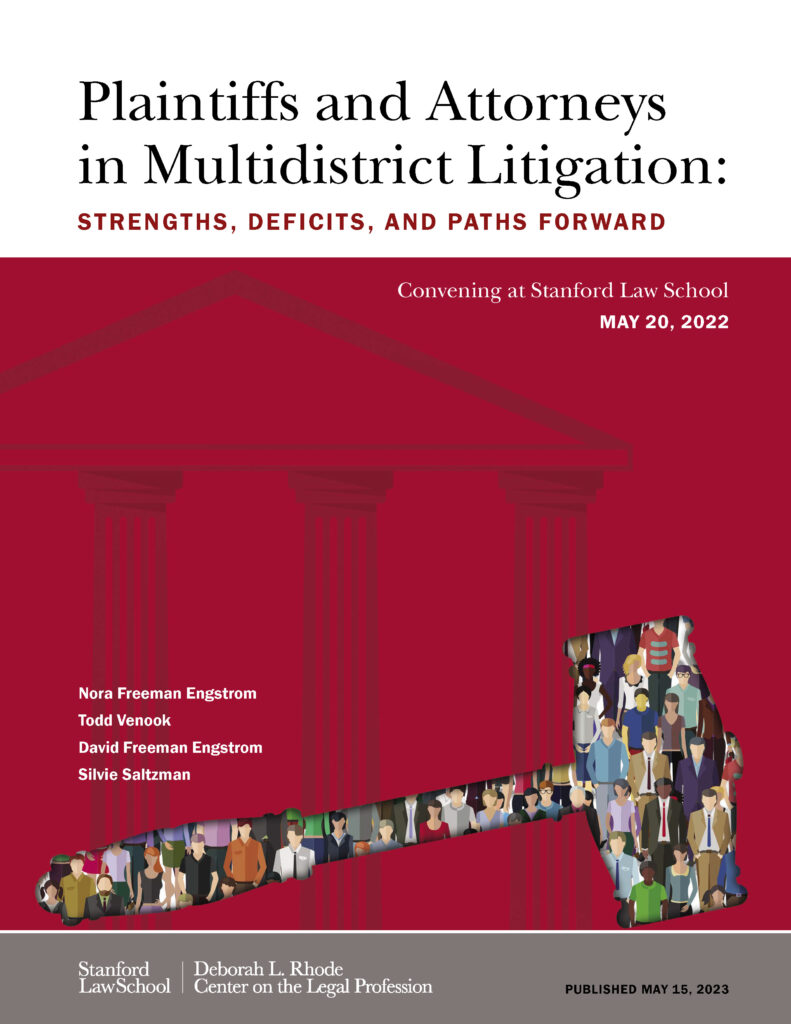
In March 2025, the Rhode Center brought together a small group of distinguished scholars, judges, policymakers, and practitioners to discuss the following question: Can academics, policymakers, and practitioners work together to help make the job of the transferee judge incrementally easier? This convening built on a 2022 Rhode Center convening focused on the lawyer-client relationship in MDLs.
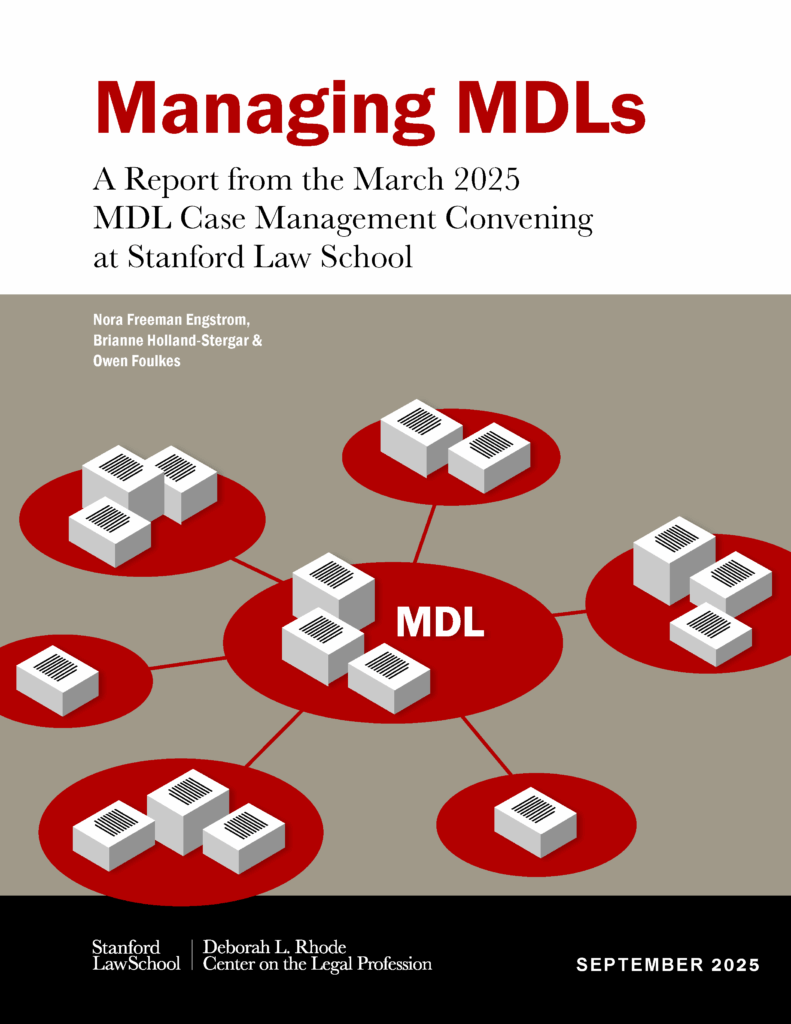
Managing MDLs synthesizes major themes from the 2025 convening, identifies tensions, and highlights possible paths forward. Among the valuable stakeholder insights about what is working and what isn’t working in contemporary MDL practice, five key lessons emerged from the convening:
- MDLs are a venue for laudable experimentation and innovation
- Early, proactive judicial management is critical across all MDL phases
- There is a pressing need to understand the influence of mass tort marketing and third-party litigation funding on MDLs
- Structural tensions between individual and collective interests define MDL practice
- Emerging technologies both solve and create MDL management challenges
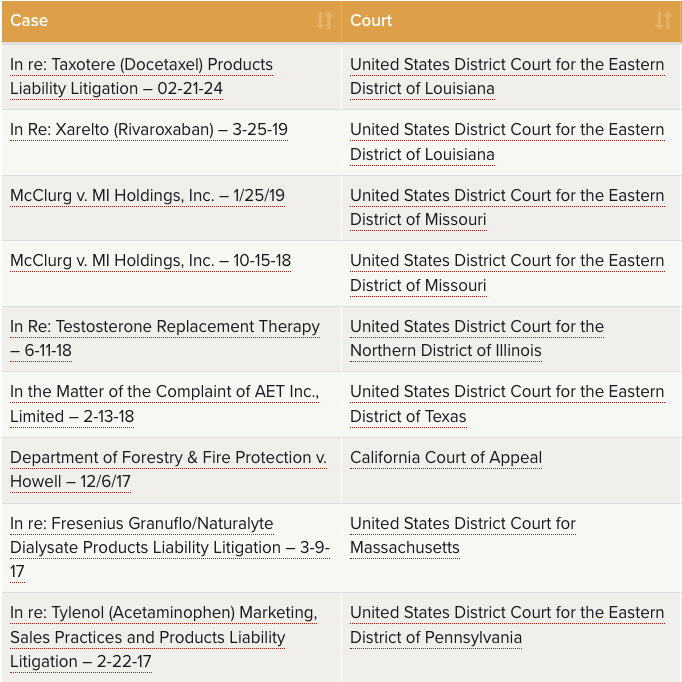
Lone Pine Order Database
Lone Pine orders are a subset of the case management orders used in large tort cases. They typically require claimants to present prima facie injury, exposure, and causation evidence by a specific date—or risk dismissal. Despite their importance, however, they are often unpublished and remain undertheorized. In addition to scholarly work on this topic, Professor Nora Freeman Engstrom, with support from the Stanford Law School library, collected and catalogued dozens of previously unavailable examples.
The use of Lone Pine orders is significant on its own—but is also an embodiment of several concurrent trends in federal litigation: increasingly rapid disposition of claims, the arrival of new and uncertain procedural mechanisms, and the now-familiar tactics of managerial judging. The Rhode Center is committed to understanding how claims are treated within this evolving system—and how, and whether, the courts continue to protect plaintiffs’ substantive and procedural rights.